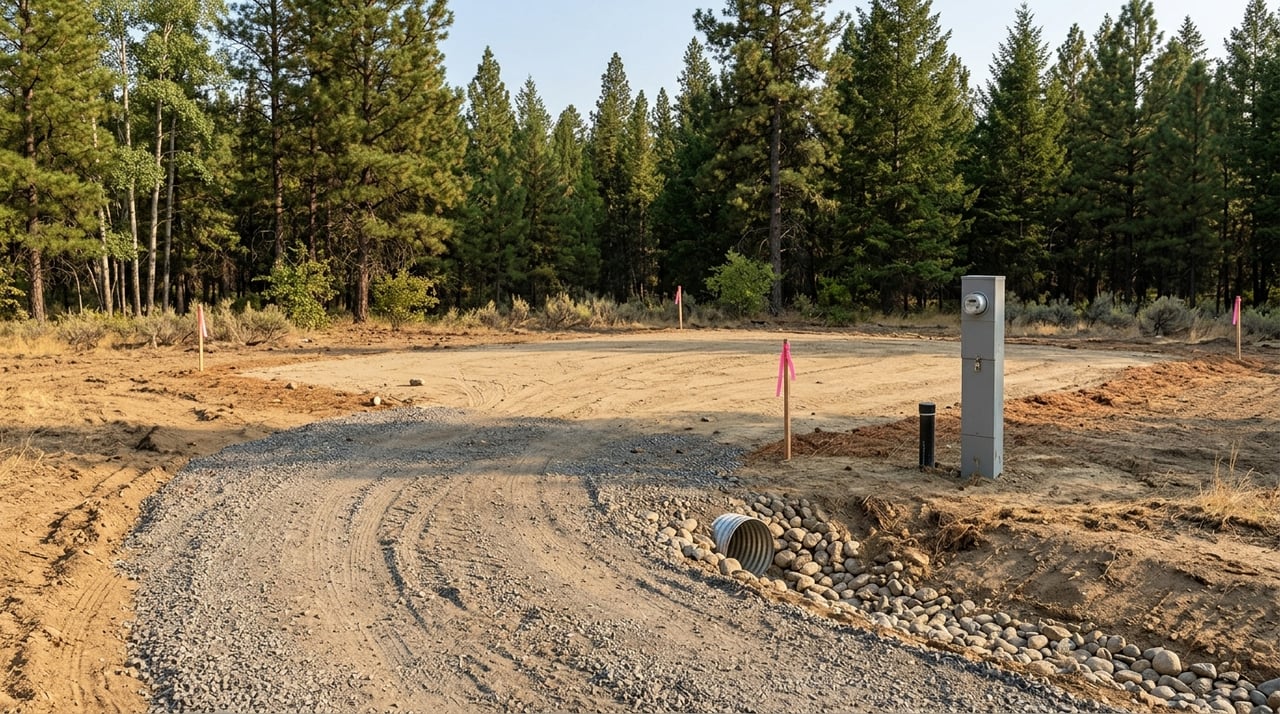
Wondering if that piece of land near Council is really buildable, accessible, and worth the investment? That is the right question to ask before you fall in love with the views. In a rural market like Council, the details behind zoning, road access, water, septic, and parcel history can matter just as much as price. If you are thinking about buying land near Council, here are the key questions to ask first so you can move forward with more confidence.
Start With Jurisdiction
One of the first things to confirm is whether the parcel is inside the City of Council or in unincorporated Adams County. That matters because the city and county follow different zoning and permit systems, and the rules can change depending on where the property sits. The City of Council and Adams County Planning & Zoning handle land use differently.
If you skip this step, you could end up researching the wrong standards. A parcel inside city limits may have very different lot size and zoning rules than one just outside town. That is why location on a map is only the beginning.
Can You Build What You Want?
Before you focus on scenery or price per acre, ask whether the parcel supports your actual plan. If you want to build a home, cabin, shop, or small homestead, you need to know whether current zoning allows it or whether a rezone, variance, conditional use permit, or another land-use action may be needed through Adams County Planning & Zoning.
In unincorporated Adams County, the county split guidelines say the minimum lot size is 5 acres in Agriculture, Timber and Grazing, and Residential R-1 and R-2 zones. Outside the cities of Council and New Meadows, or outside subdivisions with community water and sewer, building permits cannot be issued for lots smaller than 5 acres, according to the county split guidelines.
Inside the City of Council, the standards are different. The city zoning code states that the residential zone requires a 7,500-square-foot minimum lot area and 75-foot minimum width, while the commercial zone has no minimum lot area under the Council city code.
Ask for the parcel split history
This is one of the biggest land-buying questions in Adams County. A tax parcel number does not tell you the full land-use history. The county split guidelines explain that tax parcel numbers are used for assessment purposes only and do not show original contiguous tracts or lot split history.
That means you should ask for a lot split report and review the legal description before closing. The same guidelines note that two additional parcels under 40 acres can be created from an original parcel without going through subdivision review, but later divisions may trigger subdivision rules. If you are buying for future building or future division, this point is especially important.
Confirm Legal Access
A parcel can look easy to reach online and still have access issues. Before you buy, ask whether the property has recorded legal access and whether that access comes from a public road, a county-maintained road, or a private easement. Adams County Road & Bridge maintains 381 miles of roads and provides road maps and right-of-way information.
You should also ask who maintains the road and whether a driveway or right-of-way permit is needed. In a rural area, road maintenance can affect daily use, future costs, and even whether you can comfortably use the property year-round.
Look closely at winter access
If you plan to live on the land full time or use it regularly, winter access deserves special attention. Adams County Road & Bridge handles snow clearing and gravel road maintenance on county roads, but private roads and easements may work very differently.
Ask questions like:
- Is the access road county-maintained or private?
- How often is it plowed or graded?
- Who pays for repairs or improvements?
- Will emergency vehicles and delivery vehicles be able to reach the property?
For recorded easements, plats, and surveys, check what is on file with the Adams County Recorder. This is a key part of title review before closing.
Understand Water and Septic Options
For many rural land purchases near Council, water and wastewater are the biggest due-diligence items. A parcel is not automatically ready for a home just because nearby land has wells or septic systems. You need to ask whether the site can legally and practically support both.
The Idaho Department of Environmental Quality says septic systems are permitted and inspected through the public health districts, and it recommends a site evaluation before purchasing property and applying for a permit. In Adams County, septic permitting goes through Southwest District Health.
For wells, the Idaho Department of Water Resources says a drilling permit must be obtained before drilling, and the work must be completed by a licensed Idaho well driller. That makes well planning another item to investigate early rather than after closing.
Budget for testing and long-term upkeep
Private well ownership comes with ongoing responsibility. The Idaho Department of Health and Welfare notes that private wells are not regulated by the state, so owners are responsible for maintenance and regular water testing.
If the parcel is inside the City of Council, city code addresses connections to public water and sewer lines, which can be a very different path from a rural well-and-septic setup under the city code.
Check the Land Itself
Near Council, one parcel can be very different from the next. Slope, drainage, grading needs, and floodplain location can all affect where you build, how much site work is needed, and what the total project may cost.
Adams County building guidance says site plans should show buildings, property lines, easements, rights-of-way, roadways, waterways, and flood zones. That is a strong sign that survey work and site review are important before you finalize your plans.
Review floodplain and setback issues early
Adams County provides GIS maps, including parcel mapping and FEMA flood information. Checking floodplain status early can save time and money, especially if you are comparing several parcels.
Setbacks matter too. The county building department lists a 20-foot setback from the property line and an 80-foot setback from the centerline of a right-of-way in its building department guidance. If your parcel has an unusual shape or access route, these setbacks can affect where a home, shop, or driveway can actually go.
Know the local building conditions
Council-area projects also need to account for local design requirements. The county building department lists 85 mph wind, 80 pounds per square foot roof snow load, 24-inch frost depth, and Seismic Zone D. Depending on the project, Adams County may require engineering, and commercial plans must be engineer-stamped.
These details are another reason to talk with your builder, engineer, or contractor before you assume a site is simple to develop. A beautiful piece of land can still come with meaningful construction costs.
Consider Wildfire and Emergency Access
If you are buying land for a full-time home, cabin, or recreational retreat, ask how the property fits into broader emergency planning. Adams County Emergency Management maintains a Wildfire Protection Plan, which makes wildfire risk an important practical question in this area.
You should think about:
- Defensible space around future structures
- Road access for emergency response
- Driveway width and usability
- Insurance implications tied to the site
These are not just future-owner concerns. They can influence how you evaluate the parcel today.
Bring the Right Records and Professionals In
Land purchases often need more verification than a typical home purchase. In the Council area, a strong due-diligence process may involve the county planner, title company, surveyor, builder or engineer, septic installer, and well driller.
You should also ask for current records before closing. The county recorder requires original signatures, notarization, the grantee's mailing address, and a full legal description for recordable deeds and conveyances, according to its recording requirements. That is one more reason to make sure title and survey work are current.
Ask these questions before you buy
Here is a simple checklist to bring to a land showing or due-diligence period:
- Is the parcel inside the City of Council or unincorporated Adams County?
- What does zoning allow today?
- Does the parcel meet minimum lot size rules for a building permit?
- Is there a lot split report showing legal parcel history?
- Does the property have recorded legal access?
- Who maintains the road, especially in winter?
- Will I need right-of-way or driveway permits?
- Can the parcel support septic approval?
- What is the plan for water: municipal service or a private well?
- Is any part of the parcel in a floodplain?
- What setbacks limit where I can build?
- Are there terrain, drainage, snow load, or wildfire issues that affect my plans?
If your goal includes hobby farming or a small agricultural use, it may also be worth asking the Adams County Assessor about agricultural exemption forms for parcels over or under 5 acres.
A Smart Land Purchase Starts With Good Questions
Buying land near Council can open the door to a home site, cabin, shop property, or long-term investment, but only if the parcel fits your goals on paper and on the ground. The best land buyers do not just ask what the property costs. They ask what it allows, how it functions, and what it will take to use it the way they want.
If you want a local guide who understands rural property questions, land history, and the practical side of Idaho acreage, connect with Two Rivers Real Estate Company LLC. Our team is here to help you ask the right questions before you buy.
FAQs
What should you verify before buying land near Council, Idaho?
- You should verify jurisdiction, zoning, minimum lot size, legal access, parcel split history, water options, septic feasibility, floodplain status, setbacks, and road maintenance before closing.
Why does parcel split history matter for land near Council?
- Parcel split history matters because tax parcel numbers do not show whether a parcel meets land division rules or whether subdivision review may have been triggered in the past.
How do you check legal access for rural land in Adams County?
- You can review recorded easements, plats, surveys, and right-of-way documents through title work and records available from the Adams County Recorder.
What should you ask about wells and septic for Council-area land?
- You should ask whether the parcel can support septic approval, whether a site evaluation has been done, and what steps and permits are required for drilling a well.
Are building rules different inside the City of Council?
- Yes. Land inside the City of Council follows city zoning and utility rules, while land in unincorporated Adams County follows county zoning, split, and permitting standards.
Why is winter road access important when buying land near Council?
- Winter road access matters because snow clearing and maintenance may depend on whether the road is county-maintained or private, which can affect year-round usability and ownership costs.