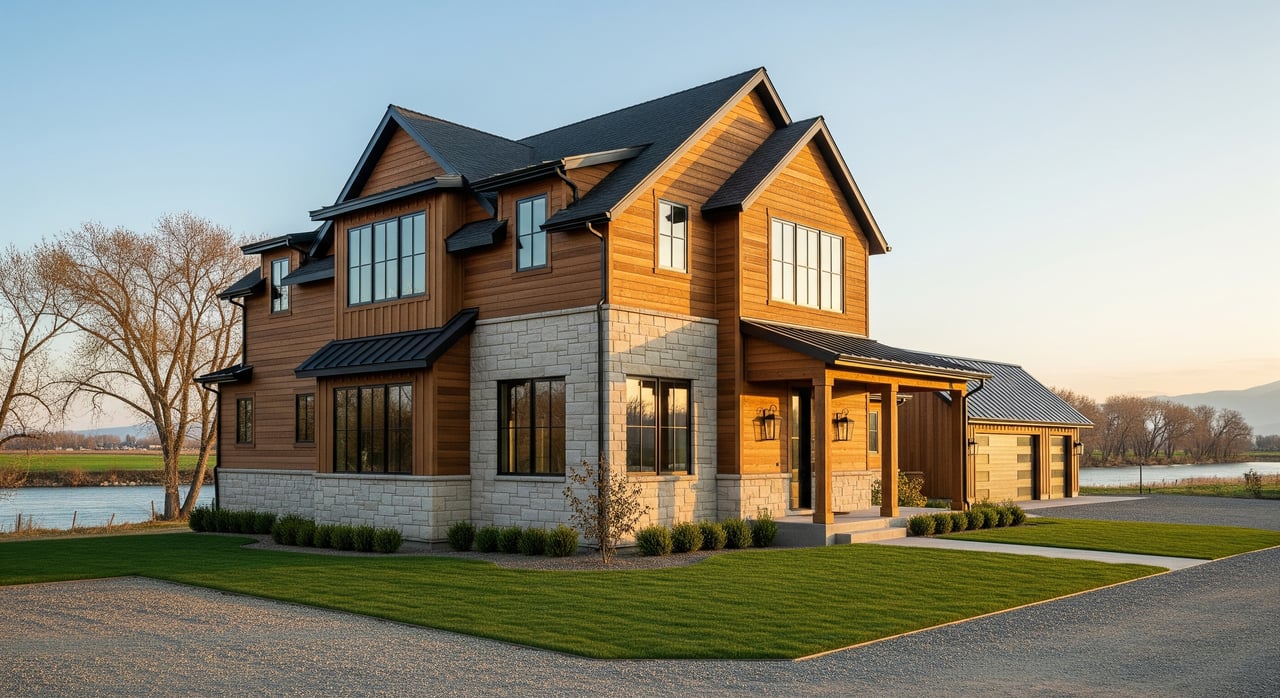
Are you eyeing a rental in Payette but unsure how to judge the return? You are not alone. Many first-time landlords hear “cap rate” and wonder what it really means for the bottom line. In this guide, you will learn a simple way to calculate cap rate, how to plug in Payette-specific numbers, and the practical levers that can raise your returns. Let’s dive in.
Cap rate basics
Cap rate is the unlevered annual return on a property in the year measured as a percentage of price. It helps you compare properties on an apples-to-apples basis without financing.
- Formula: Cap rate = Net Operating Income (NOI) ÷ Purchase Price.
- NOI is the income a property produces after operating costs, before mortgage and income taxes.
- Cap rate does not show appreciation, tax benefits, or your loan impact.
Key income terms
- Gross Scheduled Income (GSI): annual rent if fully occupied.
- Vacancy and credit loss: expected rent loss from vacant time or non-payment.
- Effective Gross Income (EGI) = GSI − Vacancy and Credit Loss + Other Income.
- Operating expenses: taxes, insurance, maintenance, management, owner-paid utilities, advertising, legal/accounting, reserves. Excludes mortgage payments, income taxes, and one-time capital projects.
- NOI = EGI − Operating Expenses.
How to calculate cap rate
Follow these steps for any listing in Payette:
- Add up monthly rent and annualize it to get GSI.
- Subtract a local vacancy assumption to get EGI.
- Estimate annual operating expenses by line item or as a percent of income.
- Compute NOI, then divide by the asking price for the cap rate.
Payette numbers to use
Payette is a small, non-metro market. Listings turn over less often, and both rents and prices are sensitive to local employment and agriculture cycles. Verify current numbers before you run the math.
- Property taxes: Payette County Assessor or Treasurer.
- Rents: local rent comps from regional rental platforms.
- Vacancy, management fees, maintenance: local property managers and brokers.
- Insurance: quotes from insurance agents serving Payette landlords.
- Utilities: local providers for owner-paid averages.
- Benchmarks: U.S. Census and HUD Fair Market Rents for context.
Example: 3-bedroom SFR in Payette (illustrative)
Use the framework above to see the math in action. Replace these with actual Payette figures for a real property.
- Purchase price: $250,000
- Monthly rent: $1,150 → GSI $13,800
- Vacancy and credit loss: 6% → Loss $828
- EGI: $12,972
- Operating expenses (annual):
- Property tax: $2,750
- Insurance: $900
- Maintenance and repairs: $690
- Management: $1,038
- Capital reserves: $690
- Utilities (owner-paid): $0
- Other: $250
- Total expenses: ≈ $6,318
- NOI: $12,972 − $6,318 = $6,654
- Cap rate: $6,654 ÷ $250,000 = 2.66%
What it means: a lower single-family cap rate like this can happen when prices sit high relative to rent. Investors often rely on financing strategy, appreciation, or expense improvements to hit their targets.
Example: Payette duplex (illustrative)
- Purchase price: $360,000
- Rents: Unit A $950/mo, Unit B $900/mo → GSI $21,000
- Vacancy and credit loss: 6% → Loss $1,260
- EGI: $19,740
- Operating expenses (annual):
- Property tax: $3,400
- Insurance: $1,200
- Maintenance and repairs: $1,470
- Management: $1,579
- Capital reserves: $1,050
- Common utilities: $600
- Other: $300
- Total expenses: ≈ $9,599
- NOI: $19,740 − $9,599 = $10,141
- Cap rate: $10,141 ÷ $360,000 = 2.82%
Sensitivity: small changes, big impact
- Self-manage: If you replace the 8% management fee with a flat $600/yr, expenses drop to ≈ $8,620, NOI rises to ≈ $11,120, and cap rate moves to 3.09%.
- Reduce vacancy: Cut vacancy from 6% to 4% on the duplex. EGI rises by $420, NOI rises by $420, and cap rate improves by about 0.12 percentage points.
- Preventive maintenance: Lower maintenance by 1% of GSI on the duplex, about $210. NOI rises by $210, and cap rate improves by about 0.06 percentage points.
The lesson: small operational wins add up. Focus on the items you can control.
Typical Payette expense ranges
These starting points help you pencil deals. Always verify by property type and condition.
- Vacancy and credit loss: 5–8% of GSI.
- Property management: 6–10% of collected rent for small multi-unit, 8–12% or flat fee for single-family.
- Maintenance and repairs: 5–10% of GSI for well-kept SFRs, 8–12% for older or multi-unit.
- Capital reserves: $250–$600 per unit per year or 3–5% of GSI.
- Insurance: often $700–$1,500/yr for small SFRs, quote locally.
- Taxes: check Payette County records for assessed value and rate.
- Total operating expense rule of thumb: 30–50% of EGI for SFRs, often similar or a bit higher for small multi-family.
What cap rate does not show
Cap rate is only one piece of the return puzzle.
- It ignores mortgage terms. Your cash-on-cash return depends on down payment, interest rate, and closing costs.
- It ignores appreciation, depreciation, and tax benefits. Speak with a local CPA for a full view of after-tax returns.
- It is a snapshot of one year. Future rents, expenses, and taxes can change.
Cap rate vs GRM
- Gross Rent Multiplier (GRM) = Purchase Price ÷ Annual Gross Rent.
- GRM is simple but ignores expenses. Cap rate bakes in operating costs for a clearer picture of yield.
What is a “good” cap rate?
It depends on your goals, risk tolerance, property condition, and interest rates. In small markets like Payette, cap rates for single-family and small multi-family can be similar to or slightly better than major metro single-family figures, but every deal is different. A higher cap rate can mean more risk or more value-add potential. A lower cap rate can signal stable demand or pricing that is high relative to rent.
Ways to improve your cap rate
Use levers that raise NOI without hurting tenant experience.
- Reduce vacancy and turnover with faster turns, better advertising, and longer leases with proper rent escalations.
- Tighten tenant screening to limit non-payment risk.
- Consider owner self-management or a hybrid approach to lower fees if it fits your time and skills.
- Invest in preventive maintenance and seasonal servicing to avoid larger repairs and downtime.
- Bundle vendor services across units to cut costs on lawn care, HVAC, or pest control.
- Add energy-efficient upgrades where you pay utilities to reduce bills.
- Review property tax assessments and appeal if out of line with comps.
- Make targeted improvements that allow justified rent increases. Always calculate payback.
Build your own Payette cap rate model
Here is a simple workflow for your next deal:
- Pull 3–5 recent sold comps for similar Payette properties and note prices.
- Gather current asking rents for similar units to estimate GSI.
- Confirm Payette County tax rates and recent assessments for comparable properties.
- Get 1–2 landlord insurance quotes for a realistic annual premium.
- Check local utility averages if you will pay any services.
- Ask local property managers for typical vacancy, management fees, and line-item costs.
- Run the math: GSI → subtract vacancy → EGI → subtract operating expenses → NOI → divide by price = cap rate.
- Test “what-if” scenarios: adjust vacancy by 1–3%, change management approach, and model a modest rent increase to see the effect on NOI and cap rate.
What this means for you
Cap rate turns a noisy set of line items into a clear yield number you can compare across properties. It will not tell the whole story, but it will highlight which deals deserve deeper analysis. Pair cap rate with cash-on-cash, your financing plan, and a realistic view of operations to buy with confidence in Payette.
If you want local input on rents, vacancy, taxes, or management strategy, reach out to the team that works these numbers every day. Connect with Two Rivers Real Estate Company LLC to talk through a property and build a simple, custom cap rate model for your goals.
FAQs
What is a cap rate for Payette rentals?
- It is the property’s annual Net Operating Income divided by its purchase price, shown as a percentage, and it helps you compare deals without considering loans.
How do I estimate vacancy in Payette?
- Start with 5–8% of annual rent, then confirm a more precise figure by speaking with local property managers about current demand and property condition.
What expenses should I include in cap rate math?
- Include taxes, insurance, maintenance, management, owner-paid utilities, advertising, legal/accounting, and capital reserves, but exclude mortgage payments and income taxes.
Can self-managing improve my cap rate?
- Yes, lowering management fees can raise NOI; for example, replacing an 8% fee with a modest flat amount increased an illustrative duplex cap rate from about 2.82% to 3.09%.
Is a lower cap rate always bad in Payette?
- Not always; it can reflect a stable, lower-risk asset or a price that is high relative to rent, so weigh risk, condition, and your financing plan.
How does cap rate differ from cash-on-cash return?
- Cap rate ignores financing, while cash-on-cash return measures your pre-tax cash flow divided by the cash you invested, which changes with loan terms and down payment.